Start here
The safest travel strategy is a small, documented and insured watch rotation kept in your personal control. Use discreet fitted protection, understand destination and customs rules, and leave any watch at home if carrying it will dominate the trip.
Compare the decision
StageBefore departure
Best practiceDocument condition, references and coverage
AvoidCarrying papers with full serial details
StageIn transit
Best practiceKeep watches in a personal item
AvoidChecked luggage
StageAt destination
Best practiceUse secure storage and remain discreet
AvoidLoose storage in rooms, cars or beach bags
StageInternational return
Best practiceKeep ownership and customs records available
AvoidAssuming every border treats the watch identically
Take only what serves the trip
Every additional watch adds another item to protect, track and insure. One versatile watch plus the watch on your wrist is often enough. Choose watches that suit the destination, activities and level of attention you are comfortable attracting.
Before leaving, record the references and current condition. Keep purchase documents and full serial-number records at home or in secure digital storage rather than in the same bag.
Protect against movement
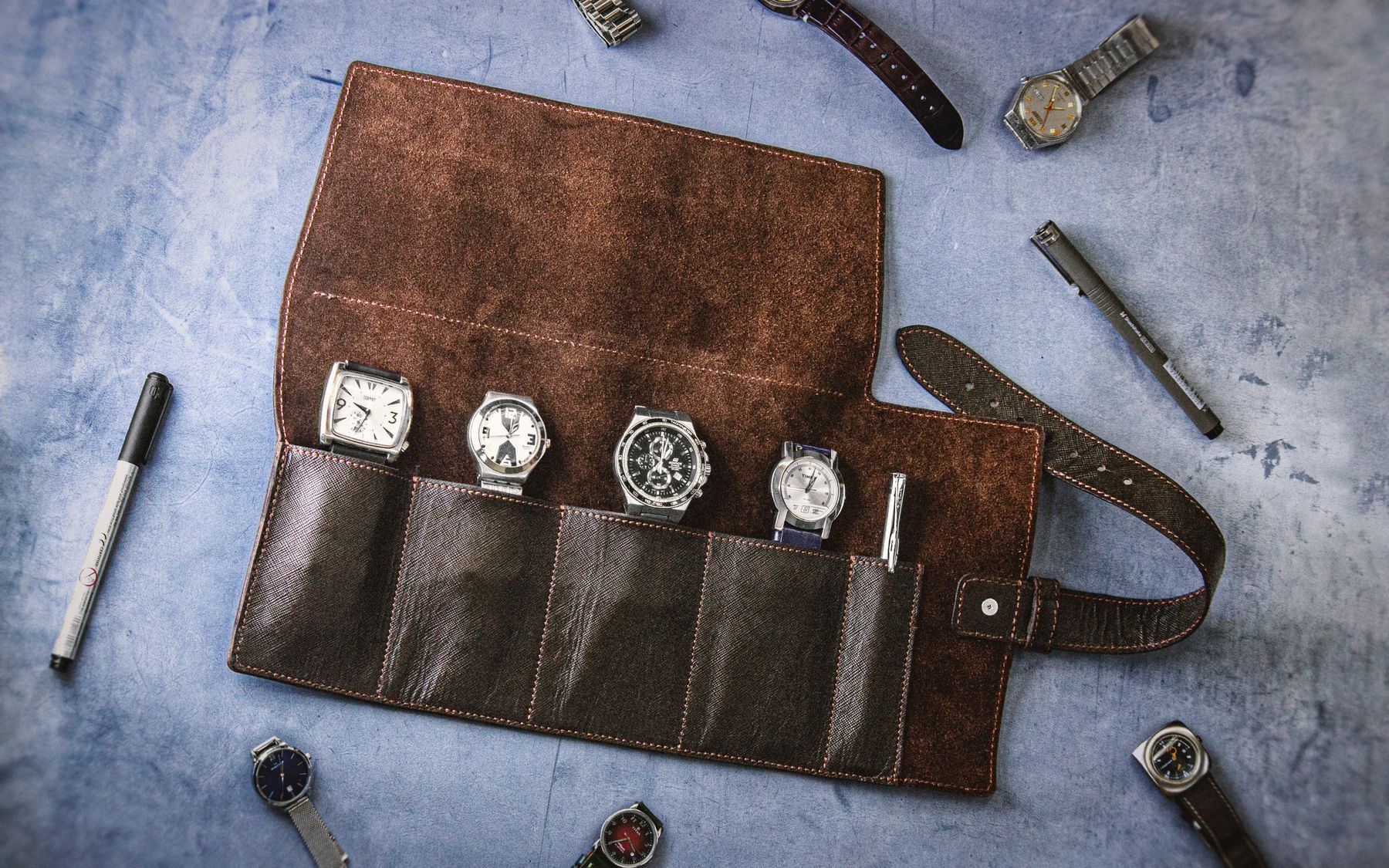
Use a fitted pouch or structured roll with one secure compartment per watch. Close clasps carefully and prevent bracelets from contacting the caseback. Crowns and pushers should not bear pressure from the case or neighboring items.
Keep watches in your personal control during transit. Checked luggage is exposed to impact, delay and loss. A discreet case inside a personal bag is usually more practical than packaging that advertises value.
Plan for the destination
Understand insurance coverage, hotel storage and any customs requirements before traveling with high-value watches. Avoid leaving watches loose in a room, rental car or beach bag. If the trip makes ownership stressful, the right decision may be to bring a simpler watch.
- Photograph condition before departure
- Use one compartment per watch
- Keep watches out of checked luggage
- Review insurance and customs before travel
Customs, proof of ownership and service abroad
International travelers may need to demonstrate that a watch was owned before the trip or properly acquired abroad. Requirements vary, so consult the relevant customs authority rather than relying on forum advice. Retain purchase and service documentation in secure digital form.
If a watch is damaged while traveling, document the condition and contact the insurer before authorizing major work. A convenient repair may complicate coverage, provenance or warranty support.
The WatchAnnex conclusion
Good watch travel is intentionally uneventful. Reduce the number carried, keep each watch protected and maintain a low profile. Future travel-gear links should point only to products that meet the fit and discretion criteria above; relevant dealer or service links should support a defined need, not interrupt the safety guidance.
Take this with you
- Confirm insurance territory, limits and security conditions
- Photograph each watch and record what is being carried
- Use one fitted compartment per watch
- Review customs rules for the destination and return journey
- Plan secure storage before arrival
- Carry fewer watches if the risk or attention feels disproportionate
Photo: Atelier Kommpass / Pexels ↗