The short answer
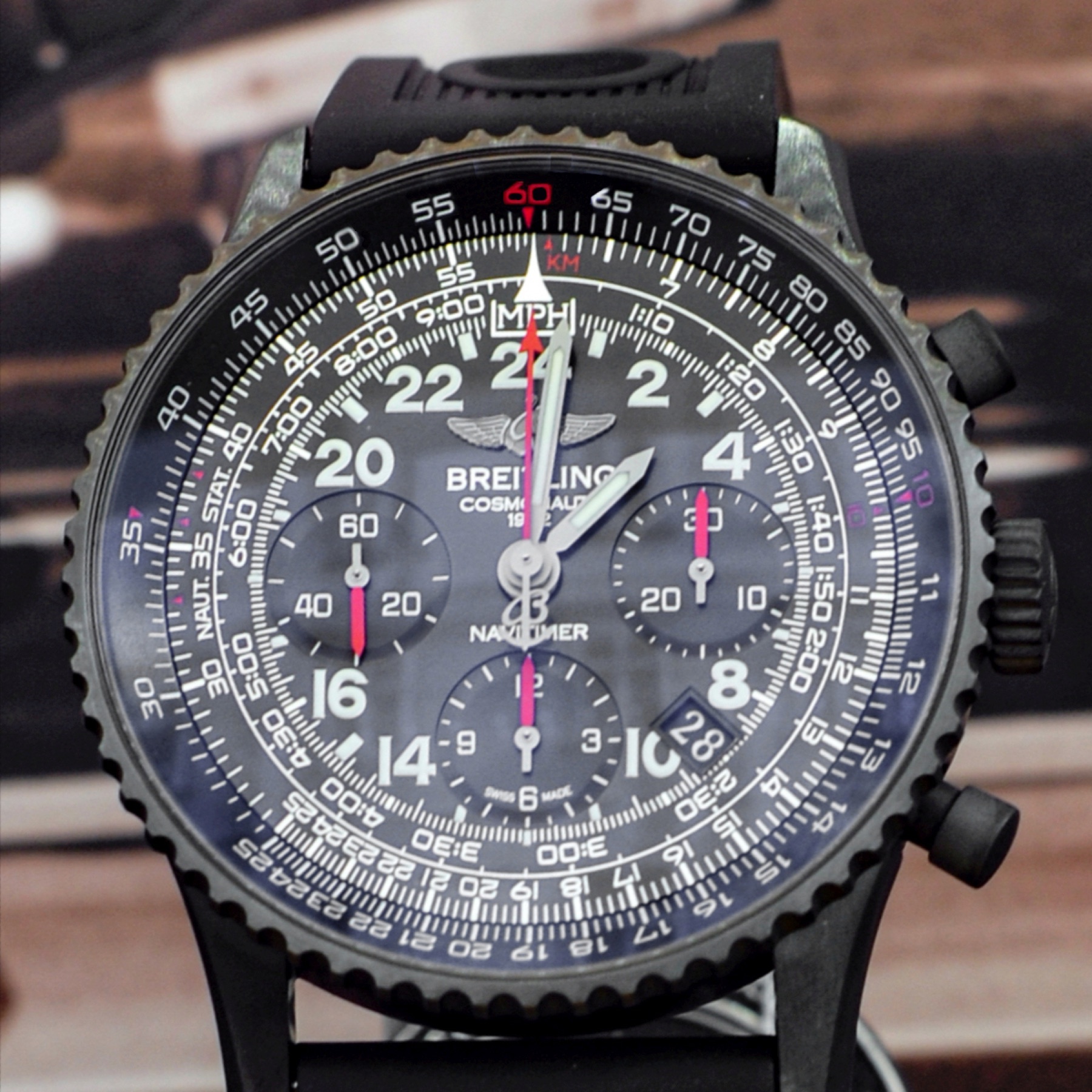
Choose a Navitimer by reference, case size, movement and dial legibility. Its slide rule and chronograph define the design, but the correct version is the one whose information remains readable and whose thickness and lug span balance on your wrist.
Compare the decision
At a glance
The Navitimer is visually defined by a circular slide rule and multi-scale dial. That complexity is its character, making size, legibility and condition central to the decision.
Fit before features
Case diameter, lug span, thickness and dial opening work together. Try the watch at normal reading distance and make sure the amount of information feels engaging rather than distracting.
What to look for
Check chronograph operation, bezel movement, dial and hand condition, service records and bracelet completeness. Exact references separate important movement and design changes.
Using and servicing the complication
The slide rule is functional, but many owners primarily value its visual and historical character. Decide whether you want to learn the scales or simply enjoy the design; either answer is legitimate.
Chronograph service should be part of the ownership budget. A low purchase price can be misleading when operation is uncertain or recent maintenance cannot be documented.
The WatchAnnex view
The right Navitimer makes complexity engaging rather than exhausting. Compare dealer listings by exact reference and caliber, and use Find a Watch when the desired case size or dial configuration is not currently available.
Buyer checklist
- Verify the exact reference and movement
- Read the dial at normal wrist distance
- Test chronograph operation and reset
- Check rotating slide-rule bezel alignment and movement
- Inspect polished case surfaces and crystal
- Review service history and included bracelet links
Photo: Ralf Roletschek / Wikimedia Commons · CC BY 3.0 · resized ↗