The short answer
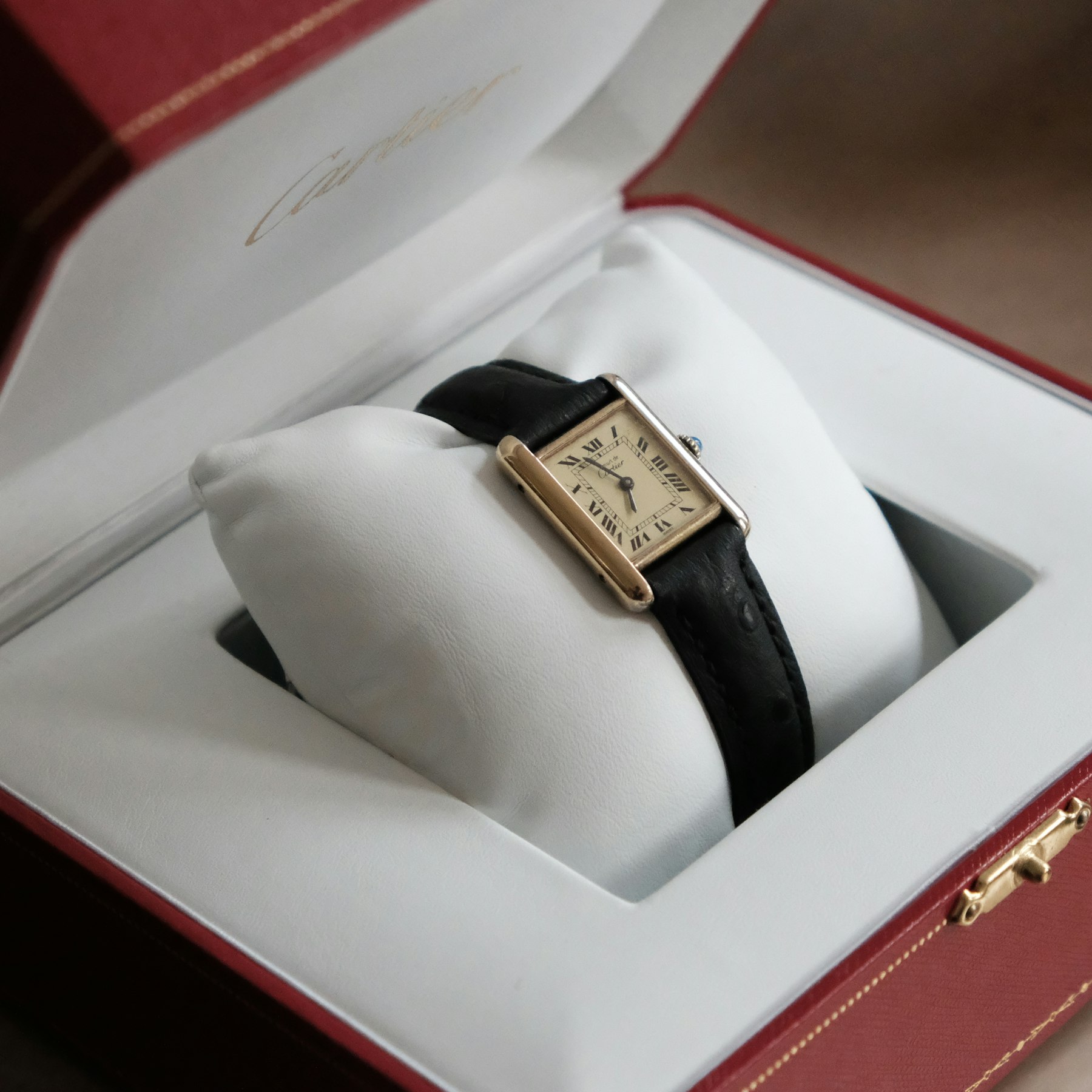
Choose a Cartier Tank by collection and proportion before movement or dial. Tank is a design family spanning distinct cases, sizes and price levels; rectangular length, width and strap integration matter more than translating a familiar round-watch diameter.
Compare the decision
At a glance
Tank describes a design language expressed through several distinct collections. Rectangular proportions, dial layout and strap integration matter more than conventional round-watch sizing.
Proportion is the decision
A Tank is often intended to wear with restraint. Compare length, width and how the case sits across the wrist; a smaller measurement may still have strong visual presence.
Movement and condition
Quartz can suit the slim, low-maintenance character of the design, while mechanical versions offer a different ownership experience. Inspect polished surfaces, dial condition, crown and correct strap hardware.
Straps, bracelets and long-term ownership
Tank straps can be central to both fit and appearance. Confirm lug and buckle dimensions, whether the original deployant is included and whether replacement straps must meet special thickness requirements. Bracelet-led models should include enough links for a comfortable fit.
On older examples, dial work, case refinishing and replacement crowns may be material. Ask for disclosure rather than assuming age alone creates collectability.
The WatchAnnex view
The strongest Tank choice is the collection and proportion that looks intentional on the wrist. Compare exact-reference dealer inventory when available; use Find a Watch when the preferred case, movement and configuration are not represented together.
Buyer checklist
- Identify the exact Tank collection and reference
- Compare case length and width on the wrist
- Confirm quartz, solar or mechanical movement
- Inspect dial printing, hands, crown and polished case edges
- Verify correct buckle, bracelet links and strap dimensions
- Review service history and replaced components