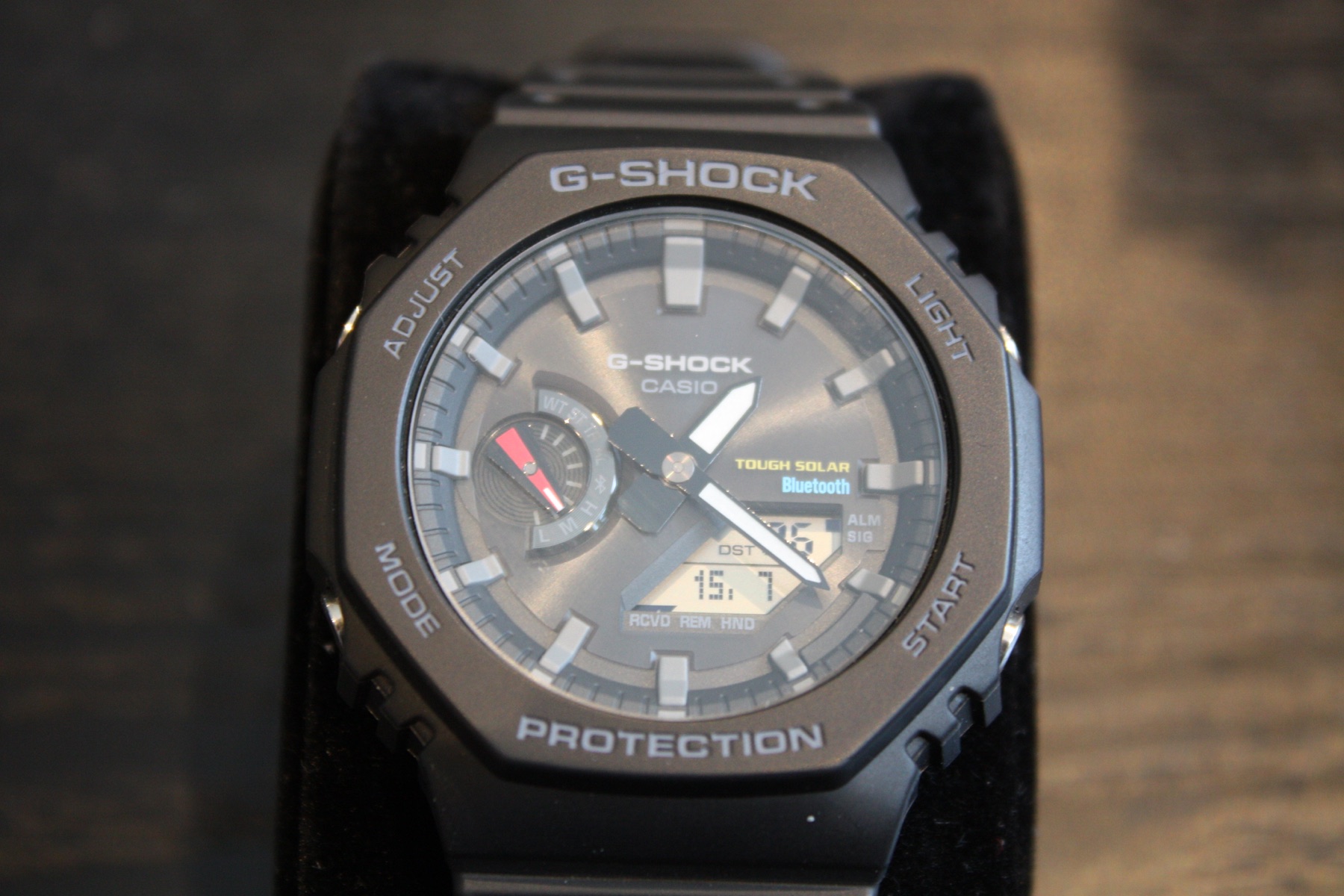
The short answer
Choose a G-Shock 2100 by case material, display, power system and wrist fit. Resin, metal-covered, full-metal, solar and connected references share the octagonal idea but differ meaningfully in weight, controls, price and daily convenience.
Compare the decision
At a glance
The 2100 Series combines an octagonal case with an analog-digital display. Materials, solar charging, connectivity and case dimensions vary across the family.
Choose the features you will use
A simpler resin model keeps the original lightweight appeal. Metal construction, solar power or connected features add convenience and weight. Confirm the exact module and reference.
What to look for
Check buttons, display segments, hand alignment, illumination and strap condition. On used examples, confirm charging or battery behavior and make sure all functions can be demonstrated.
Modules, modifications and replacement parts
The module number is the reliable path to instructions and function details. Similar cases may contain different solar, connectivity or world-time capabilities, so verify the module rather than inferring from appearance.
Aftermarket bezels and bracelets are common. Ask whether parts are original, whether water resistance may have been affected and whether the original components are included.
The WatchAnnex view
A good 2100 is the lightest, clearest configuration that supplies the functions you will use. Compare exact-reference inventory where relevant; use Find a Watch for limited or discontinued versions instead of substituting a similar colorway.
Buyer checklist
- Confirm the exact reference and module number
- Compare case width, thickness and lug-to-lug fit
- Test display contrast and hand visibility
- Operate every button and illumination mode
- Check solar charging or battery behavior
- Inspect bezel, strap, bracelet and clasp condition
Photo: Kasperl099 / Wikimedia Commons · CC BY-SA 4.0 · resized ↗