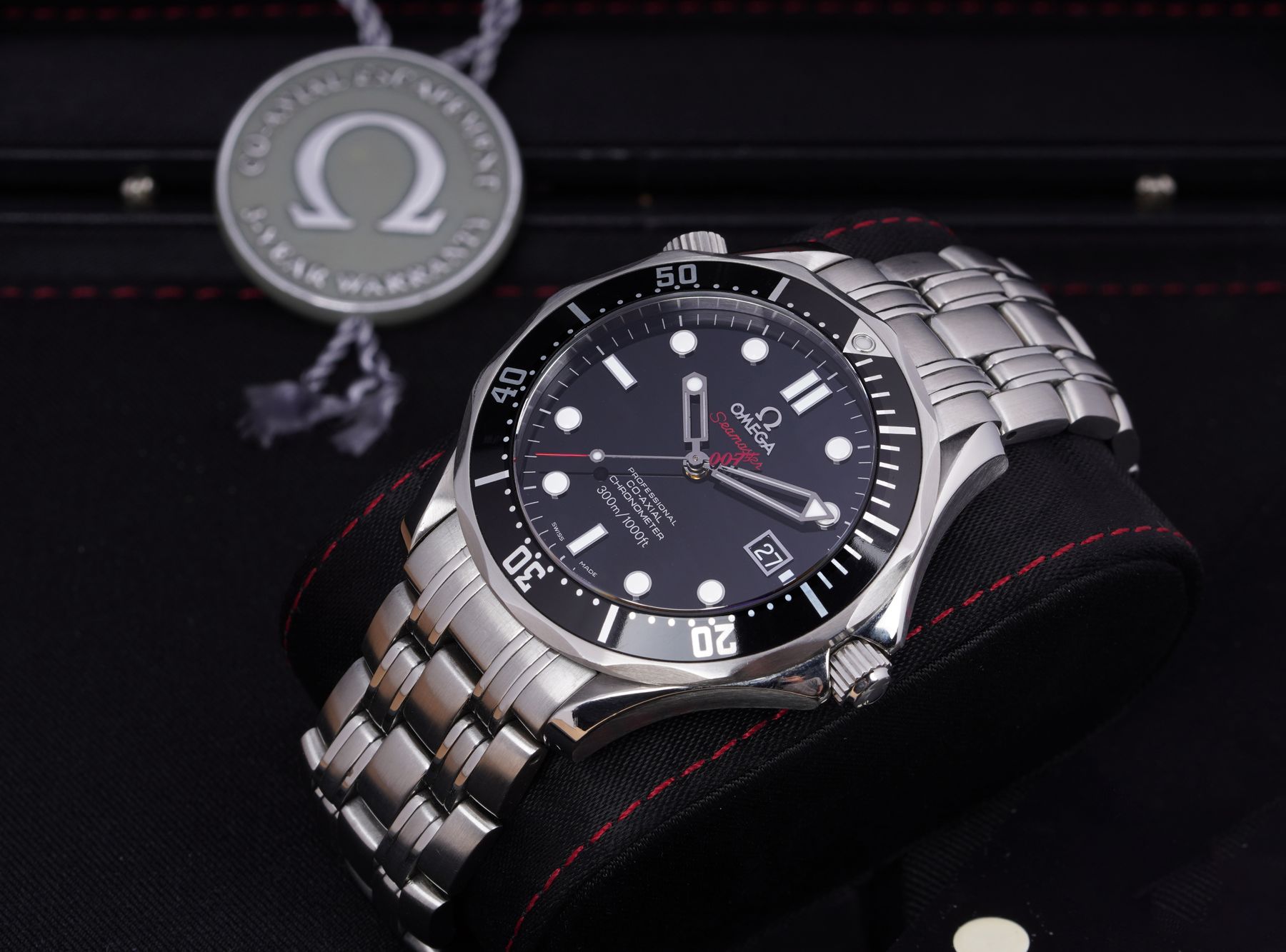
The short answer
Seamaster is a collection name, not one watch. Start by choosing the branch, professional diver, heritage diver or versatile sport watch, then compare exact references, dimensions, movements and complete configurations within that branch.
Compare the decision
Start with the branch
Seamaster is an umbrella name. Professional dive watches, heritage-inspired models and versatile everyday pieces can all sit within it, so model and reference matter more than the family name alone.
Define the job
Decide whether you want a dedicated dive watch, a quieter daily watch or a historically styled design. Water resistance, bezel type, bracelet and thickness should follow that use.
What to look for
Verify the exact reference, test bezel and crown operation where applicable, and ask about movement performance and service. Compare complete configurations because bracelets and accessories can be costly to add later.
Movement, water resistance and service
Seamaster references span different movement families and service eras. Confirm the caliber in the exact watch and ask for current performance rather than assuming every Co-Axial or Master Chronometer reference behaves identically.
For water use, pressure testing and seal condition matter more than the rating printed on a historical specification sheet. A pre-owned dive watch should be treated as untested until evidence says otherwise.
The WatchAnnex view
Choose the Seamaster branch that fits the job, then use exact-reference dealer inventory to compare condition and completeness. If a desired configuration is absent, Find a Watch can route that precise demand without broadening it into an undefined Seamaster search.
Buyer checklist
- Identify the full collection branch and reference
- Compare thickness and lug span as well as diameter
- Test bezel and crown operation when applicable
- Confirm bracelet, clasp, links and accessories
- Review movement generation, service history and water-resistance testing
Photo: Quang Viet Nguyen / Pexels ↗