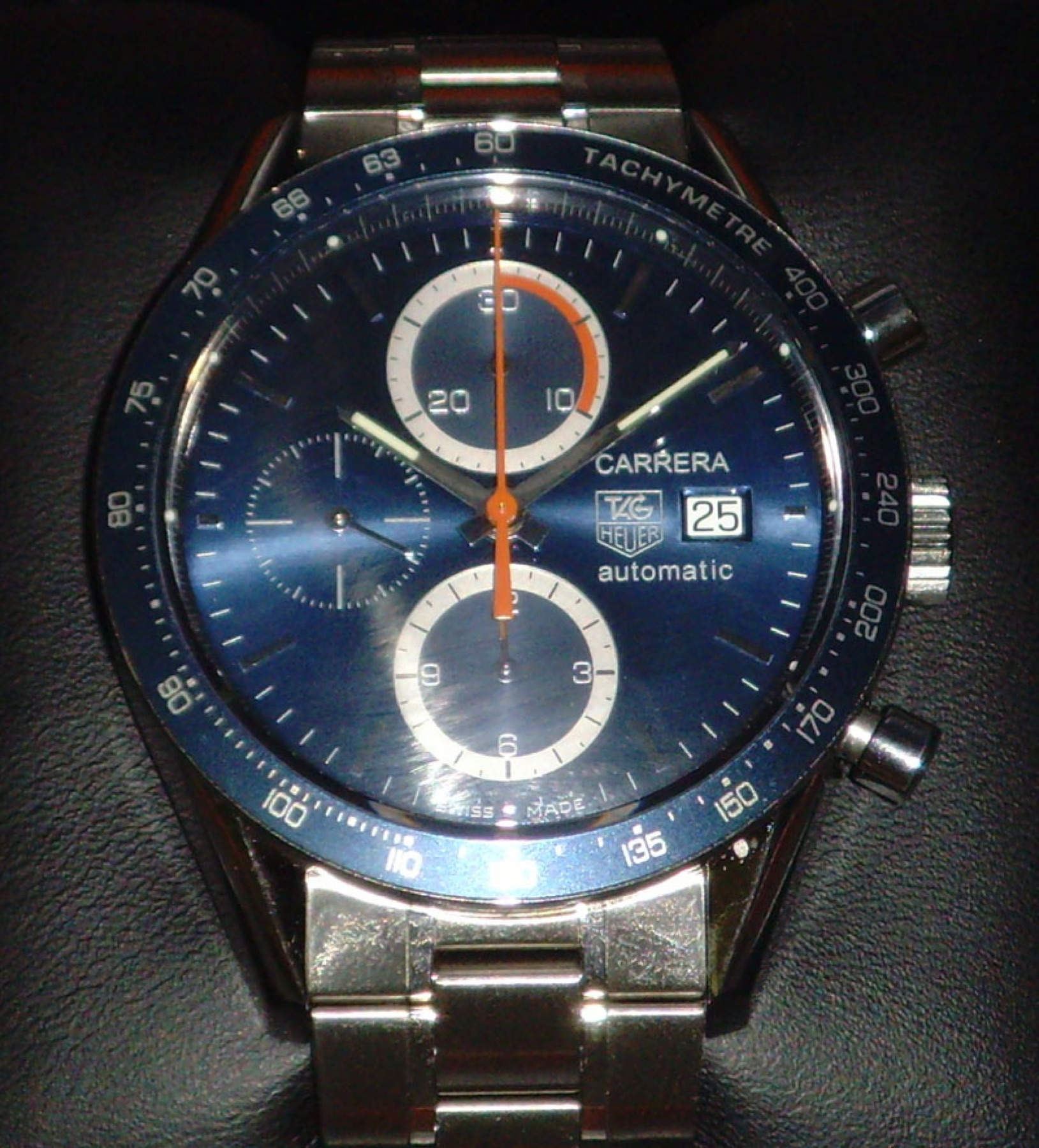
The short answer
Carrera covers decades of chronographs and simpler sport watches. Decide first whether you want a chronograph, then narrow by generation, movement, size and dial layout; never compare prices using the Carrera name alone.
Compare the decision
At a glance
Carrera covers many generations, sizes and complications. The clean racing-chronograph idea remains central, but buyers should never compare two listings from the name alone.
Choose the format
Decide whether the chronograph is essential or whether a simpler time-and-date version better fits daily use. Case thickness and dial density often matter as much as diameter.
What to look for
On chronographs, check start, stop and reset operation. Confirm reference, movement, service history and included bracelet links, then compare condition across the case, bezel and clasp.
Movement and service implications
Chronograph movements add components, adjustment points and service cost compared with a time-only watch. Identify the exact caliber, ask when it was serviced and confirm that every function can be demonstrated.
Do not treat an exhibition caseback or in-house label as a substitute for current performance and transparent history. The complete watch and seller support remain the practical decision.
The WatchAnnex view
Choose a Carrera by format and reference, not racing history alone. Relevant dealer inventory should allow like-for-like comparison; Find a Watch is appropriate when a specific dial, generation or chronograph configuration is missing.
Buyer checklist
- Confirm the full reference and caliber
- Test chronograph start, stop and reset
- Check that hands reset precisely
- Compare diameter, lug span and thickness
- Inspect dial, bezel, case, bracelet and clasp separately
- Review service documentation and warranty terms
Photo: Mike Chapman / Wikimedia Commons · CC BY-SA 3.0 · resized ↗