Start here
Safe home care is limited to gentle cleaning, observation and familiar external adjustments with the correct tools. Do not open the case, polish surfaces or assume water resistance; unusual performance, moisture or resistance belongs with a qualified professional.
Compare the decision
TaskSurface cleaning
Reasonable at homeRemove loose grit and wipe gently
Professional boundaryDeep cleaning with uncertain seals or materials
TaskStrap change
Reasonable at homeKnown system, correct tool and protected surface
Professional boundaryIntegrated, proprietary or resistant fittings
TaskPerformance check
Reasonable at homeRecord accuracy and power reserve
Professional boundaryMovement adjustment or repair
TaskWater resistance
Reasonable at homeInspect crown and follow guidance
Professional boundaryPressure testing and gasket work
Know the boundary
At-home care means gentle cleaning, strap changes when you have the right tools, and observation of how the watch is performing. Opening a case, polishing metal or attempting movement work can cause damage and compromise water resistance.
Follow the manufacturer’s instructions for the specific watch. Materials, coatings and water-resistance conditions vary, so a universal cleaning routine is not appropriate.
Clean without creating damage
Remove loose grit before wiping so it does not act like an abrasive. Use a clean, soft cloth and avoid pressing debris into polished surfaces. Introduce water only when the crown is secure and recent water-resistance testing supports the intended exposure.
Leather straps should be handled according to their maker’s care guidance and allowed to dry naturally away from heat.
Observe and document
Notice changes in accuracy, power reserve, winding feel, crown operation and condensation. A sudden change is useful information for a watchmaker. Keep service invoices and note when water resistance was last tested.
- Use clean, dedicated cloths
- Work over a protected surface
- Stop if a component requires force
- Seek service immediately if moisture appears
Cleaning by component, not by assumption
Case metal, coatings, crystals, bezels, seals and strap materials may require different handling. A routine suitable for an uncoated steel dive watch may be inappropriate for a plated case, leather strap or vintage watch with uncertain seals. Separate removable straps only when you can reinstall them securely.
Avoid abrasive compounds, household cleaners and powered polishing. Removing scratches also removes material and changes surface geometry; that is refinishing, not cleaning.
The WatchAnnex conclusion
Good home care is conservative: keep the watch clean, dry when appropriate, securely fitted and well documented. Future gear links should support low-risk maintenance only. When symptoms cross the boundary into diagnosis, the meaningful next step is a qualified service connection rather than another tool recommendation.
Take this with you
- Read care guidance for the exact watch and materials
- Work over a clean, protected and well-lit surface
- Remove grit before wiping
- Introduce water only with appropriate current confidence in resistance
- Document sudden changes in accuracy or power reserve
- Stop immediately if moisture appears or a component requires force
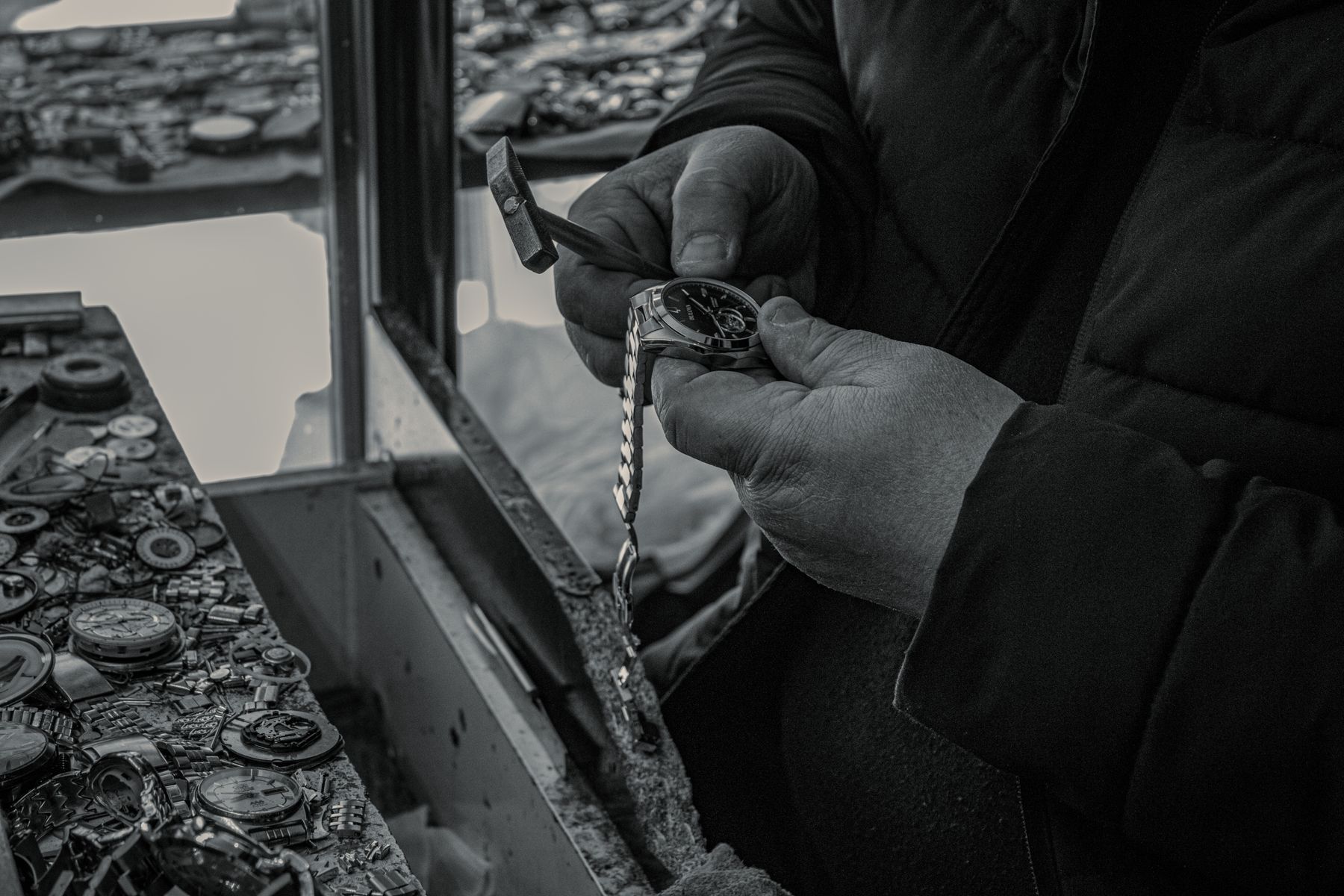
Photo: Gizem Toprak / Pexels ↗