Start here
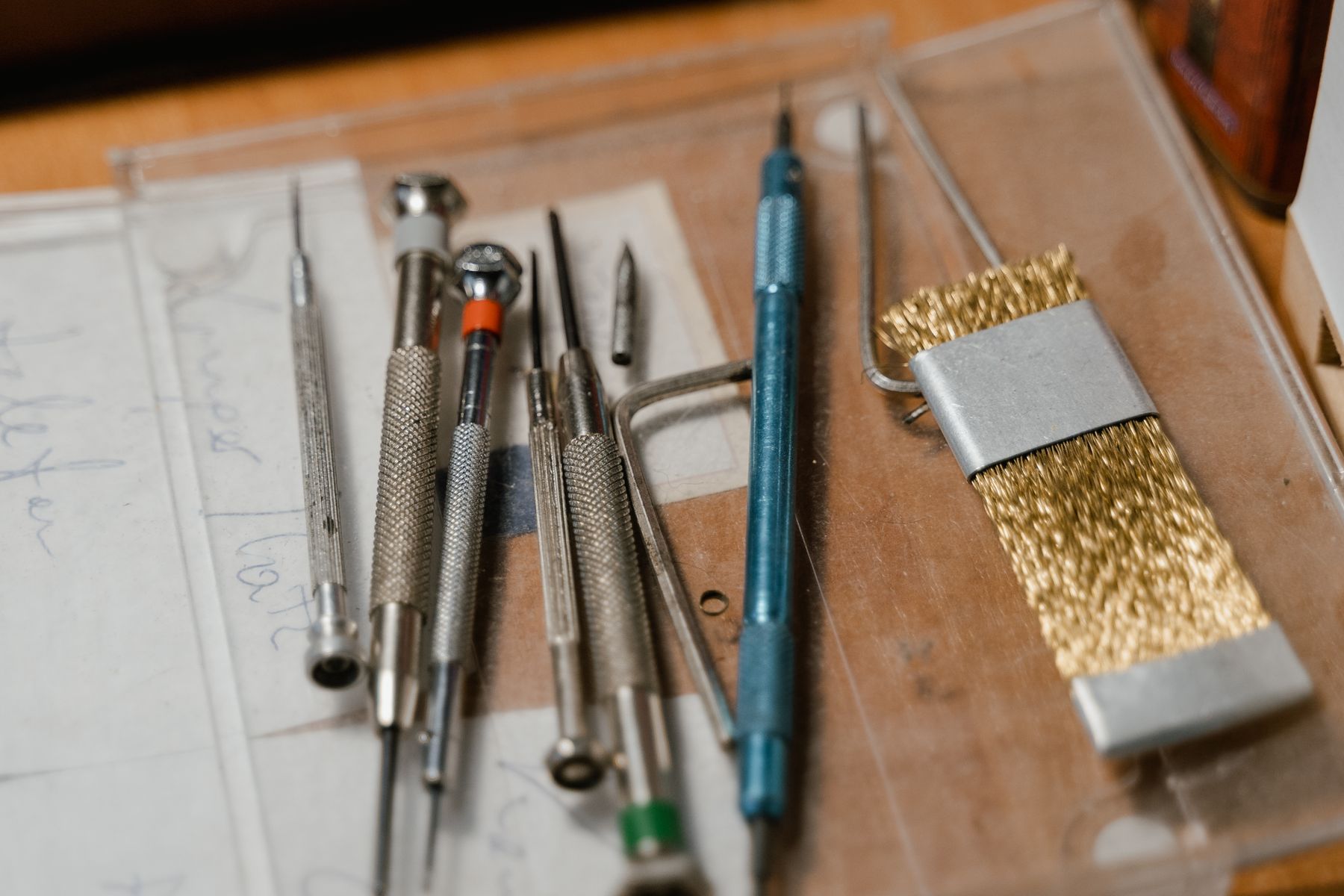
Most owners need only a fitted spring-bar tool, protected work surface, clean cloths, measurement tool and organized parts tray. Buy tools for tasks you understand; case opening, movement work and uncertain bracelet systems belong with a professional.
Compare the decision
ToolSpring-bar tool
Appropriate useCompatible strap removal and fitting
Selection pointTip shape and replaceability
ToolPrecision screwdriver
Appropriate useKnown bracelet screws
Selection pointBlade must fill the slot
ToolCaliper or metric gauge
Appropriate useLug, strap and hardware measurement
Selection pointNon-marring handling
ToolSoft work mat and parts tray
Appropriate useSurface protection and organization
Selection pointClean, stable and well lit
Start with low-risk work
Most owners need only tools for strap changes, bracelet sizing when the system is familiar, light cleaning and measurement. Movement work and case opening require training, controlled conditions and the correct replacement seals.
A quality spring-bar tool with tips matched to the watch is more useful than a large generic kit. Add a soft work mat, microfiber cloths and a way to organize tiny parts.
Use the correct interface
Bracelet screws, pins, quick-release bars and drilled lugs require different techniques. Identify the system before applying pressure. Screwdriver blades should fit the slot fully; an undersized blade can slip and mark the bracelet.
Protect nearby surfaces and work in strong, even light. If a fastener resists normal pressure, stop rather than escalating force.
What not to improvise
Kitchen knives, sewing needles and household pliers do not become watch tools because they fit into a gap. Improvised leverage can scratch a case or launch a spring bar. When the job is uncertain or the watch is valuable, professional help is inexpensive compared with repair.
- Spring-bar tool
- Fitted precision screwdriver when appropriate
- Soft non-slip work mat
- Clean microfiber cloths
- Small parts tray and measuring caliper
Build the kit around permissions, not possibility
A tool being available does not make every operation sensible at home. Caseback tools, polishing equipment, demagnetizers and pressure equipment require knowledge about seals, tolerances and testing. Start with tasks the watchmaker or manufacturer expects an owner to perform.
Quality matters most at the contact point. A properly fitted replaceable tip or blade is more valuable than a large kit filled with approximate sizes.
The WatchAnnex conclusion
A restrained toolkit supports measurement, secure strap work, light cleaning and observation. Future approved product links should specify the compatible interface and replacement parts. When the guide cannot establish a safe match, WatchAnnex should direct the owner to qualified service instead of encouraging experimentation.
Take this with you
- Identify the exact attachment or fastener before buying a tool
- Choose tips and blades that fit fully
- Protect the watch and surrounding work surface
- Organize removed bars, screws and links immediately
- Practice only on low-risk familiar systems
- Stop when normal controlled pressure does not work