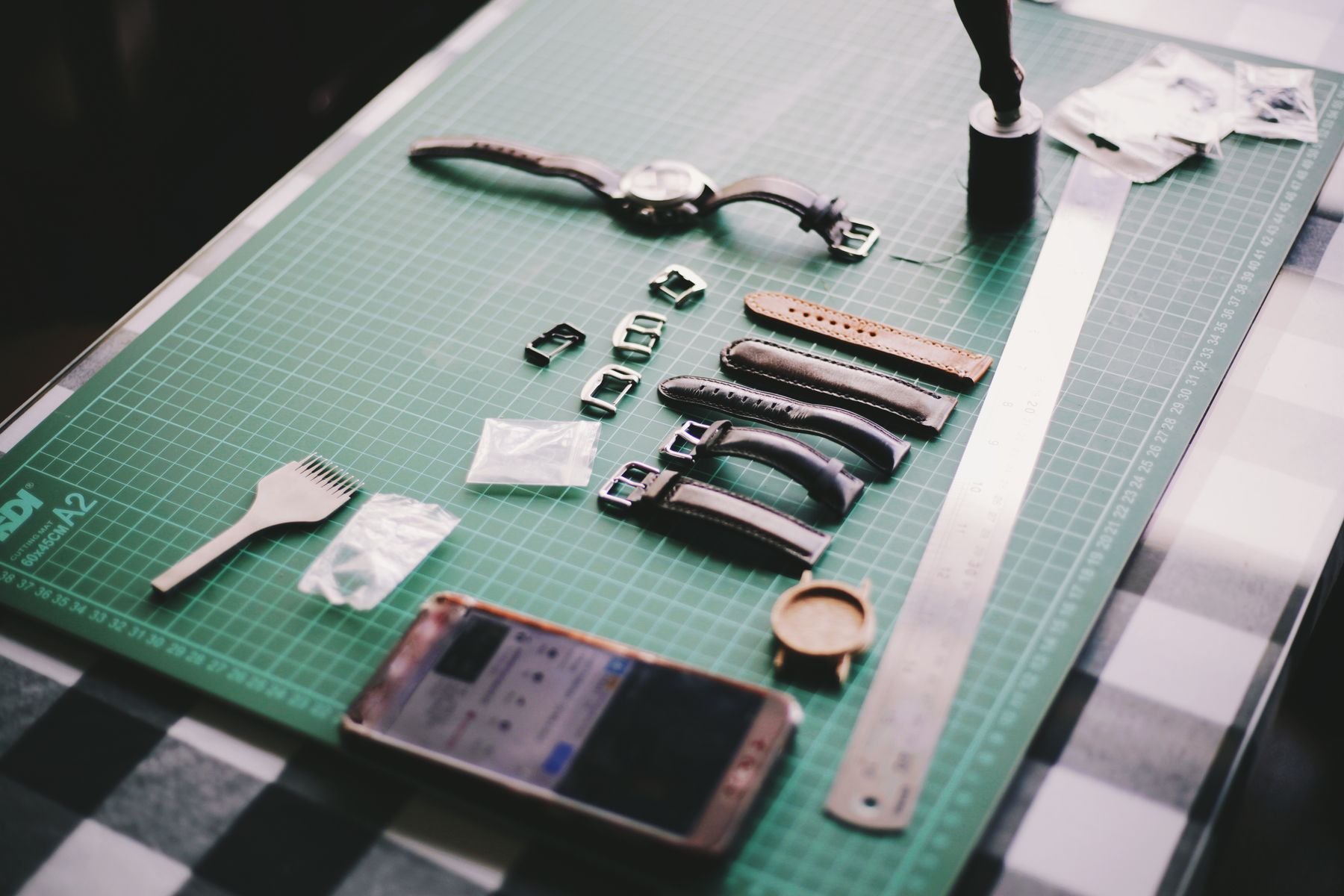
Start here
Choose a replacement strap by compatibility, intended use and fit before considering color. Confirm lug width, spring-bar system, case clearance, length and buckle width; then select a material that suits the water, heat and formality the watch will encounter.
Compare the decision
DecisionLug fit
What to verifyExact width and attachment system
Common mistakeForcing a near-sized strap between lugs
DecisionCase clearance
What to verifyThickness and spring-bar position
Common mistakeStrap rubbing the case
DecisionLength
What to verifyBuckle position and usable adjustment
Common mistakeBuying only by wrist circumference
DecisionMaterial
What to verifyWater, sweat, climate and dress
Common mistakeChoosing appearance without considering use
Begin with compatibility
Measure the lug width where the strap meets the case and the buckle width at the opposite end. A one-millimeter mismatch can create movement, compression or hardware that simply does not fit. Integrated cases and proprietary spring bars may require brand-specific parts.
Check the clearance between the spring bar and case. Thick straps can rub the case or fail to articulate, especially on watches with short or sharply curved lugs.
Choose material for use
Leather is comfortable and develops character, but repeated water and sweat shorten its life. Rubber suits heat and water when the compound and ventilation are comfortable. Textile is light and adjustable, though added layers can raise the watch on the wrist.
Match the strap to how the watch will actually be worn. A formal appearance is not helpful if the strap cannot handle the owner’s routine.
Fit is part of safety
Choose a length that places the buckle comfortably on the underside of the wrist with enough adjustment remaining. Use correct spring bars and inspect them when changing a strap. If installation requires force or the bar does not seat clearly, stop and reassess.
- Lug width
- Buckle width
- Strap length
- Spring-bar type and clearance
- Water and heat exposure
Hardware, taper and construction
A strap’s taper changes both appearance and buckle compatibility. Confirm whether you will reuse the original buckle or deployant and whether its attachment and thickness requirements match the new strap. Stitching, lining, keepers and edge finishing affect durability more than a fashionable material name.
Quick-release bars can simplify changes, but their levers need clearance and the bars still must match the lug holes. On valuable or highly polished watches, professional fitting may cost less than correcting a slipped tool or damaged lug.
The WatchAnnex conclusion
The right strap is a compatible component, not merely an accessory. Future approved product links should surface exact dimensions, attachment type and intended conditions. Where a watch uses proprietary hardware, a relevant dealer or qualified service connection is more useful than recommending a universal strap.
Take this with you
- Measure lug and buckle width in millimeters
- Identify standard, curved, integrated or proprietary attachment
- Check spring-bar diameter and case clearance
- Choose short, regular or long length from actual measurements
- Confirm buckle or deployant compatibility
- Use professional installation when the attachment is unfamiliar
Photo: Kevin Menajang / Pexels ↗