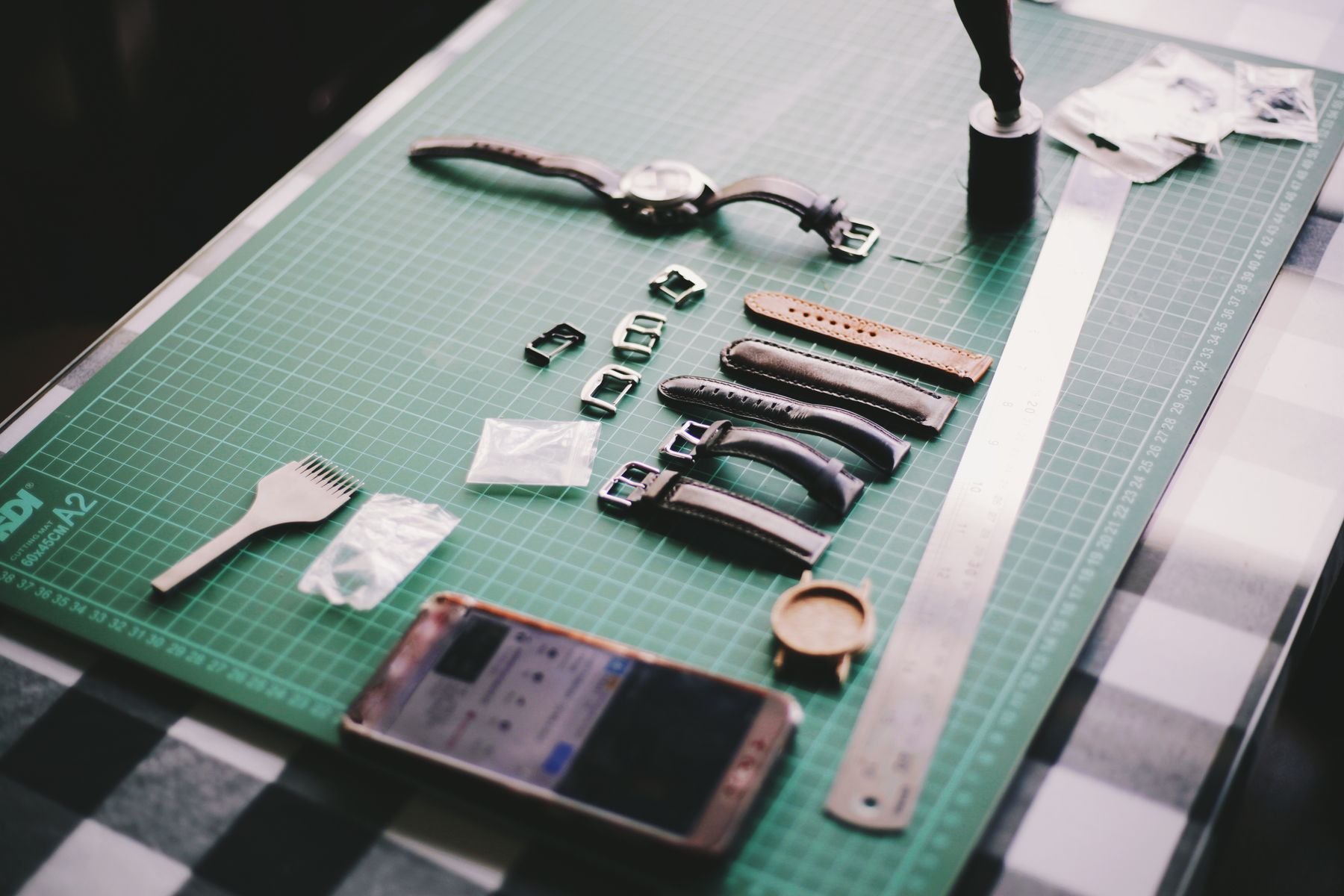
Start here
Choose leather for character, softness and a more formal presentation; choose rubber for water, heat and easy cleaning. Construction quality and fit matter as much as the material, and many owners are better served by changing straps seasonally.
Compare the decision
FactorWater and sweat
LeatherUsually limited tolerance
RubberGenerally the stronger choice
FactorAging
LeatherDevelops patina and wear
RubberCompound may harden, crack or attract lint
FactorAppearance
LeatherDress to casual depending on finish
RubberSport-led, though fitted designs can look integrated
FactorCare
LeatherAllow to dry; follow maker guidance
RubberRinse and dry when the watch permits
Leather changes with wear
Leather softens, bends and develops surface character over time. That can make it personal and comfortable, but moisture, salt and repeated heat can stain or weaken it. Construction and lining matter as much as the type of leather named in a product description.
A leather strap works best when it can dry between wears. It is not the practical choice for swimming unless the manufacturer specifically designed it for water exposure.
Rubber is not one experience
Rubber generally tolerates water and sweat better, but compounds differ in softness, lint attraction, odor and durability. Ventilation, taper and keeper placement determine whether it remains comfortable through a warm day.
A fitted rubber strap can look integrated with the case, while a straight universal strap is easier to replace and move between watches.
Choose for the routine
Use leather when appearance, softness and gradual aging suit the watch and environment. Use rubber when water, heat and easy cleaning are priorities. Many owners benefit from keeping both and changing them seasonally rather than demanding one strap do every job.
- Leather: character, formality, limited water tolerance
- Rubber: water use, easy cleaning, variable compounds
- Either: correct sizing and secure spring bars
Quality signals in each material
With leather, examine the lining, edge finishing, stitch consistency and how the strap bends near the lugs. A premium hide does not compensate for poor construction or unsuitable water exposure. With rubber, assess flexibility, surface texture, odor, dust attraction and whether keepers remain secure.
Claims such as waterproof, natural or performance should be supported by specific care and use guidance. Product price alone does not establish comfort or longevity.
The WatchAnnex conclusion
Material should solve the conditions of wear while preserving comfort and secure attachment. Future affiliate links, once approved and disclosed, should be filtered by dimensions and use rather than commission or brand visibility. A related WatchAnnex strap guide should remain the first link when the reader has not yet established compatibility.
Take this with you
- Match material to actual water and heat exposure
- Check lining, ventilation and keeper placement
- Confirm lug width, length and buckle compatibility
- Review whether fitted ends require a specific case
- Keep a second strap if seasons or activities vary
Photo: Kevin Menajang / Pexels ↗