Start here
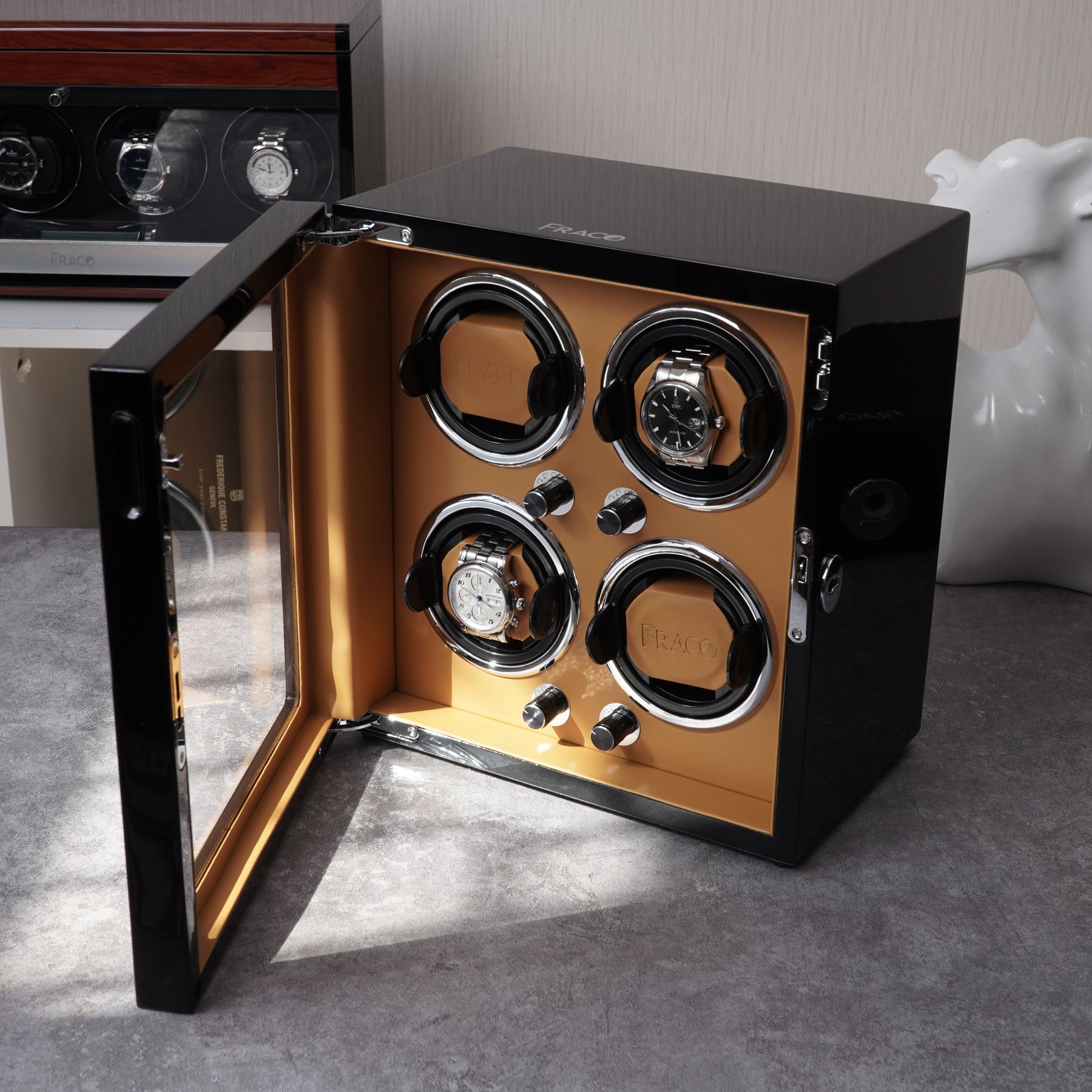
A winder rotates an automatic watch through programmed work and rest cycles so its rotor can maintain power. Correct direction, conservative turns per day and secure fit matter; a winder cannot improve accuracy, repair weak power reserve or replace service.
Compare the decision
SettingDirection
What it controlsClockwise, counterclockwise or bidirectional winding
Practical approachMatch the movement maker’s guidance
SettingTurns per day
What it controlsApproximate daily rotation count
Practical approachUse the lowest reliable setting
SettingCycle timing
What it controlsPeriods of movement and rest
Practical approachAvoid unnecessary continuous rotation
SettingCushion fit
What it controlsHow the watch is supported
Practical approachSecure without bracelet tension
The basic action
A watch winder slowly rotates an automatic watch so the rotor moves and transfers energy to the mainspring. Most units alternate movement and rest rather than turning continuously. The goal is to maintain a useful state of wind, not to keep the motor running all day.
Movements differ in whether they wind clockwise, counterclockwise or in both directions. They also differ in the approximate number of turns needed to maintain power.
Settings should match the movement
More rotation is not automatically better. Start with manufacturer or movement-maker guidance and use the lowest setting that keeps the watch running reliably. A winder cannot regulate timekeeping or repair a watch that loses power unusually quickly.
Position and cushion fit matter. The watch should remain secure through the cycle without the bracelet rubbing against the case or enclosure.
Evaluate the device plainly
Prioritize stable rotation, appropriate controls, quiet operation and secure fit. Decorative cabinets, lighting and high capacity may add cost without improving the care of the watch. Keep the unit on a stable surface away from moisture and strong heat.
- Movement-specific direction
- Adjustable turns per day
- Timed rest periods
- Secure, appropriately sized cushion
What a winder cannot tell you
A watch remaining powered does not prove that it is accurate, properly lubricated or water resistant. Likewise, a watch stopping on a winder may reflect an incorrect setting, poor orientation, weak winding performance or a movement problem.
Evaluate timekeeping and power reserve independently. When behavior changes, document it and have the watch assessed instead of increasing rotation indefinitely.
The WatchAnnex conclusion
Treat a winder as a configurable convenience device. Match it to the movement, use restrained settings and verify secure physical fit. Future product links should expose those technical details clearly, while dealer or service connections should appear only when the reader’s issue concerns the watch rather than the accessory.
Take this with you
- Confirm the movement, not merely the watch model
- Find reliable direction and turns-per-day guidance
- Start conservatively and observe whether power is maintained
- Check bracelet, caseback and crown clearance
- Stop using the device if rotation becomes rough or inconsistent
Photo: Quang Viet Nguyen / Pexels ↗