The short answer
Choose watch size from the complete wrist relationship: lug-to-lug length, thickness, dial opening, case shape, bracelet articulation and crown comfort. Diameter is useful only when interpreted with those other dimensions and your preferred visual proportion.
Compare the decision
Look beyond diameter
Lug-to-lug length, thickness, dial opening, bezel width and bracelet shape all affect presence. Two watches with the same published diameter can wear very differently.
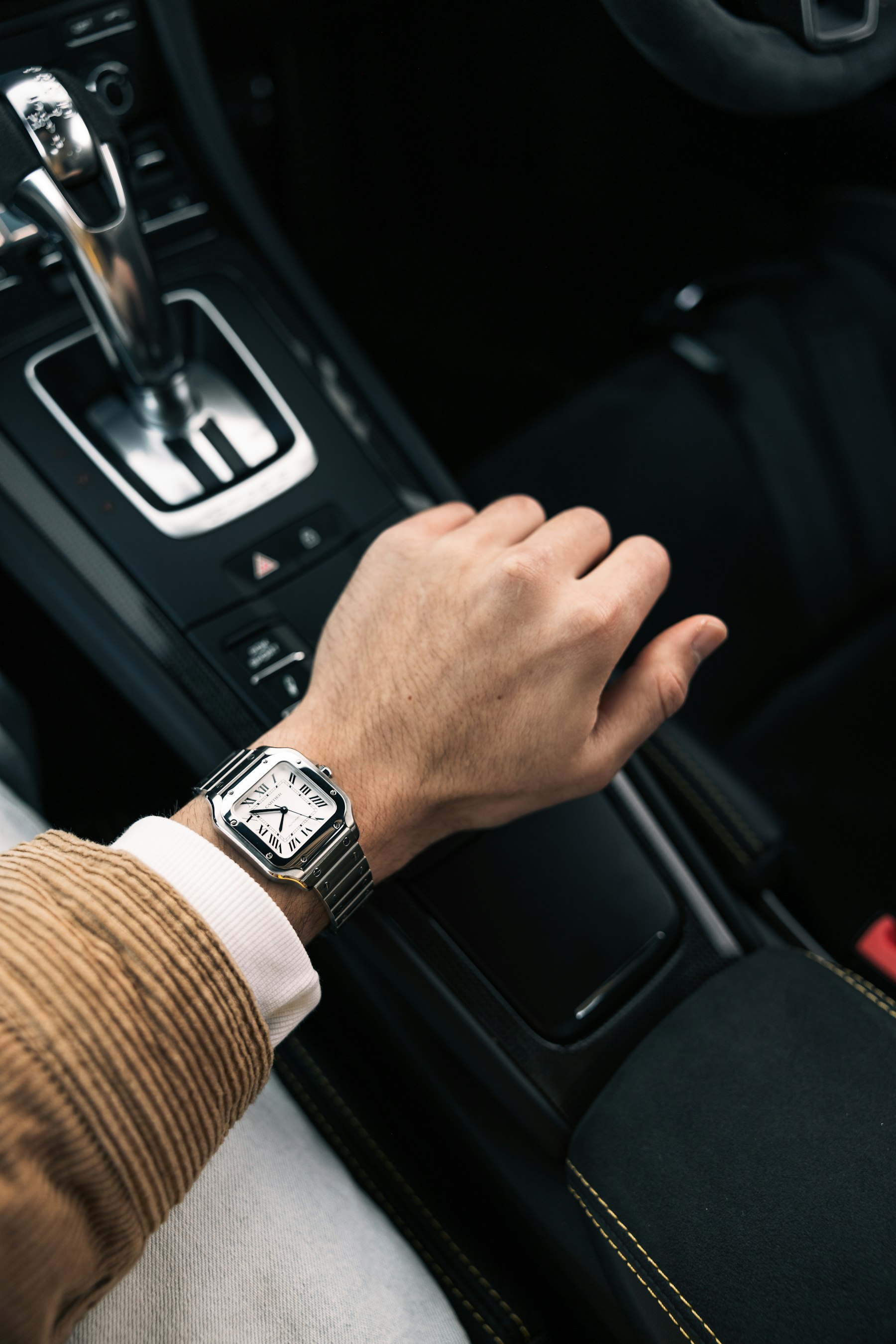
Judge the whole wrist view
Look at the watch from a normal distance with your arm relaxed. The lugs should sit securely, the crown should not cause discomfort and the bracelet or strap should support the case.
Use preference, not a rule
There is no universal wrist-size formula. Dress, field, dive and chronograph designs carry scale differently. Try neighboring sizes and choose the proportion you will actually enjoy wearing.
When buying remotely
Compare dimensions with a watch you already know, ask for wrist photographs only as context and confirm return terms. Measurements reduce uncertainty but do not replace experience.
Buyer checklist
- Measure a watch you already know and enjoy
- Compare lug-to-lug length and rigid end links
- Check crown comfort with the wrist bent
- View the watch from normal distance
- Test bracelet or strap support
- Use return terms when buying remotely
Photo: Stephan Louis / Unsplash ↗