Start here
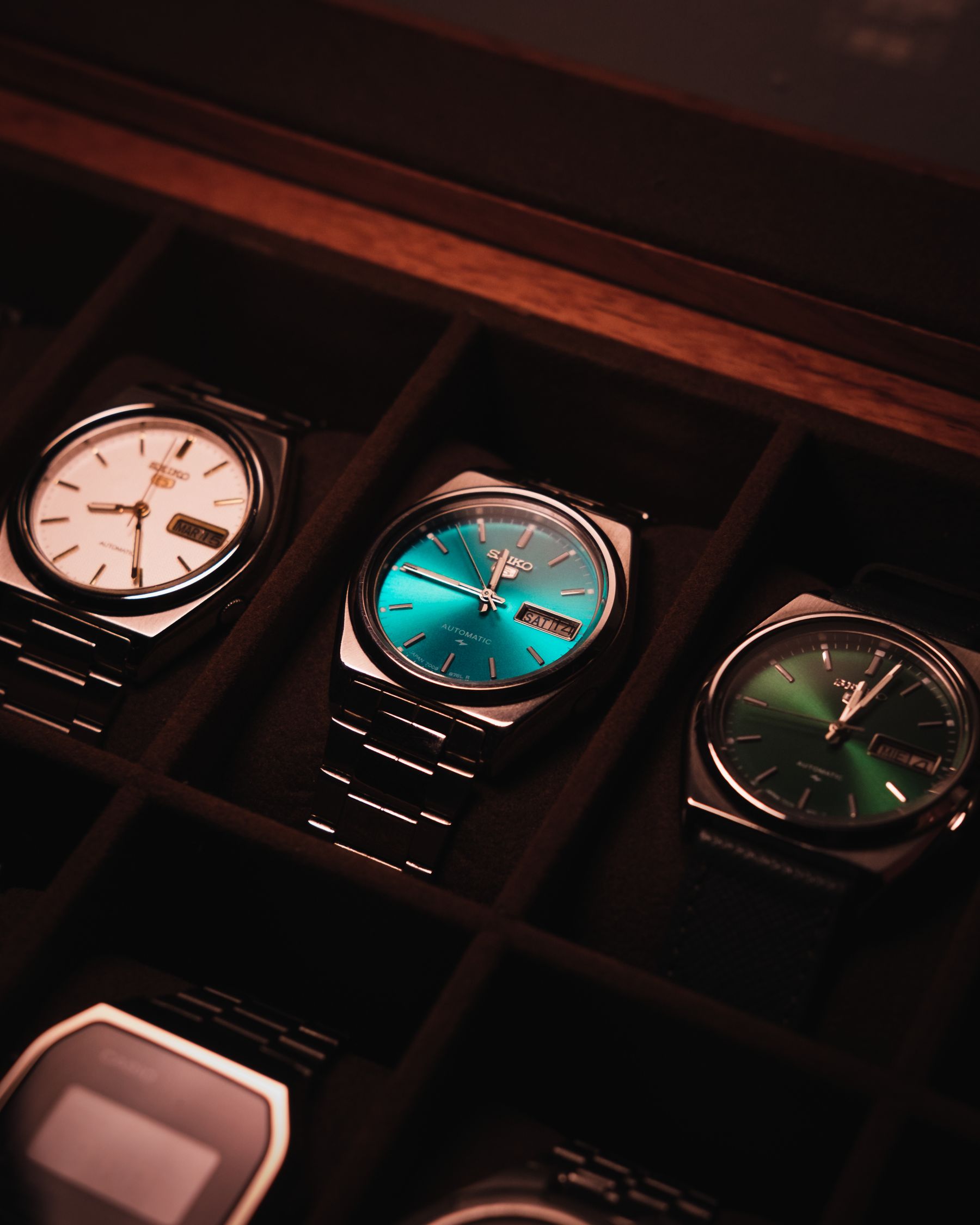
Buy a watch box by internal dimensions, cushion fit, separation and placement. The safest box is the one that holds each watch without pressure or movement and can live in a dry, discreet location.
Compare the decision
DecisionCompartments
PreferClearance around case, crown and bracelet
AvoidCases or clasps touching dividers
DecisionCushions
PreferSupport without bracelet tension
AvoidOversized pillows that force closure
DecisionLid
PreferStable closure and safe internal clearance
AvoidHardware positioned over watches
DecisionLocation
PreferDry, temperature-stable and discreet
AvoidSunlight, bathrooms and heat sources
Measure before buying
Case diameter alone does not tell you whether a watch will fit. Tall crystals, large crowns, long straps and rigid bracelets all change the space required. Measure your largest watch and check the internal dimensions of each compartment.
A cushion that is too large can place constant tension on a bracelet or clasp. A cushion that is too small lets the watch move. Look for a fit that is secure without forcing the watch closed.
Look inside first
Individual dividers should keep metal surfaces apart. The lining should be clean, smooth and firmly attached, with no exposed staples, rough seams or hard edges. A transparent lid is useful only if the box will remain away from direct sunlight.
Humidity and location matter more than a claimed “luxury” material. Place the box in a stable, dry area away from radiators, bathrooms and windows.
Buy enough, not too much
A partly empty box is not a problem, but oversized storage can become awkward and harder to secure. Choose capacity for the collection you reasonably expect to use, then keep spare links, warranty cards and service records organized elsewhere.
- Check internal compartment dimensions
- Test cushion fit for bracelets and straps
- Prefer complete separation between watches
- Keep the box in a stable, dry location
Security and insurance are separate questions
A display box organizes watches; it does not make them secure. High-value collections may require a rated safe, documented insurance coverage or off-site storage. Confirm coverage conditions and avoid assuming that a lock on a decorative box changes the insurer’s requirements.
Keep a private inventory with references, serial records, photographs, receipts and service history. Do not store the only copy of those records beside the watches.
The WatchAnnex conclusion
Start with the watches and the storage location, then choose the box. Internal fit and separation determine whether it protects the collection. Future approved gear links should identify exact dimensions and intended use so readers can compare suitable products rather than shop by appearance alone.
Take this with you
- Measure the internal compartment, not only advertised capacity
- Test cushions with both bracelet and strap watches
- Inspect lining, seams, staples, hinges and closure hardware
- Confirm tall crystals and crowns clear the lid and dividers
- Choose a secure location before choosing the box size
Photo: Oguz Kagan Cevik / Pexels ↗