Start here
Store infrequently worn watches clean, dry, individually protected and documented in a stable location. Mechanical watches usually may remain stopped; monitor quartz batteries, preserve accessories separately and inspect the watch before returning it to regular use.
Compare the decision
Watch or componentMechanical watch
Storage approachProtected and normally allowed to stop
Periodic attentionCheck function before wear
Watch or componentQuartz watch
Storage approachDry storage with battery awareness
Periodic attentionAddress depleted batteries promptly
Watch or componentLeather strap
Storage approachDry, relaxed and away from heat
Periodic attentionCheck for stiffness or deterioration
Watch or componentBoxes and papers
Storage approachSeparate dry archival storage
Periodic attentionInspect for moisture and material breakdown
Choose a stable environment
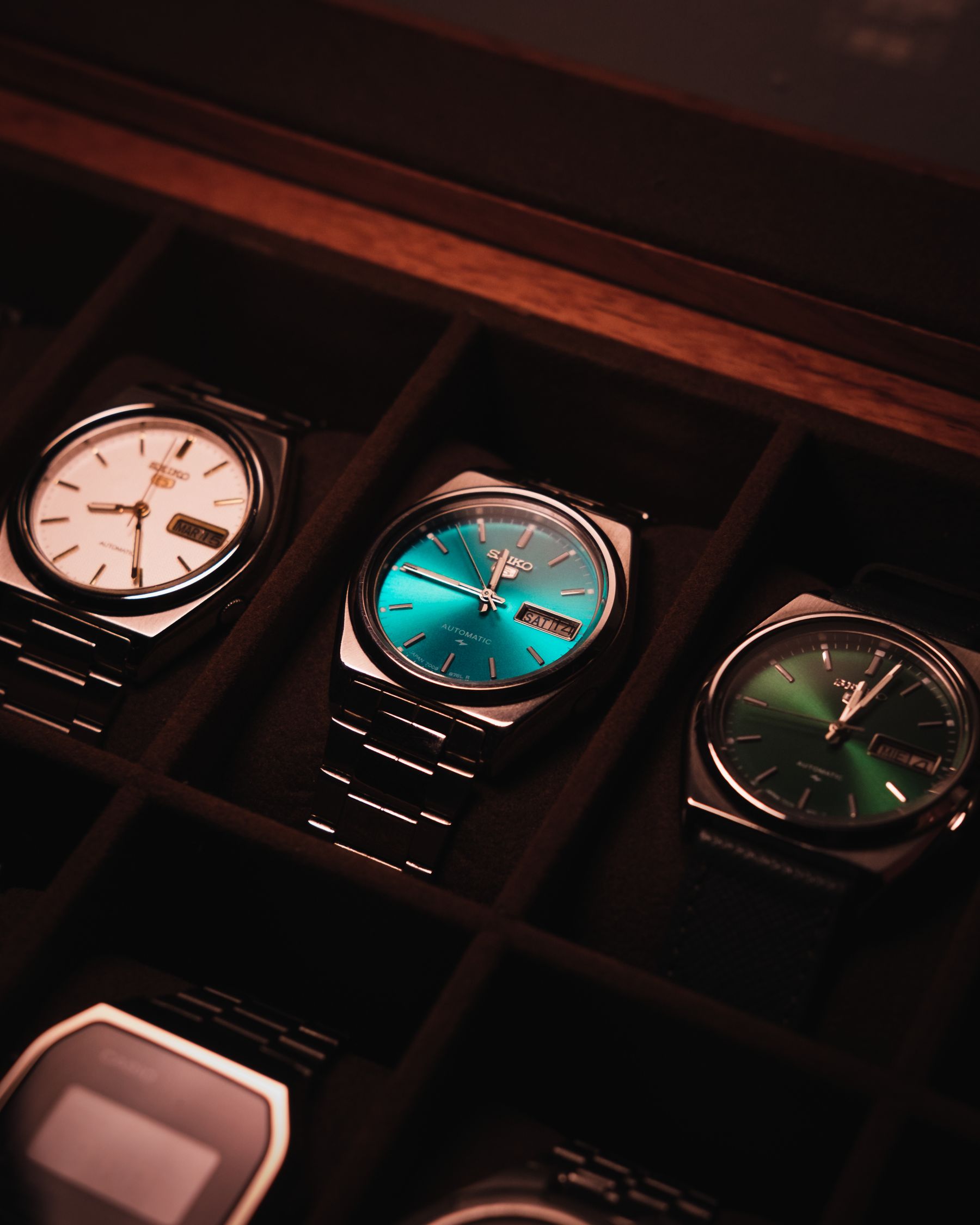
Store watches in a clean, dry place away from direct sunlight, strong magnets and large temperature changes. Give each watch enough space that the case, bracelet and clasp cannot rub against one another.
Close bracelets carefully without trapping metal against the caseback. For leather straps, avoid tight bends and allow any moisture from wear to dry before storage.
Let mechanical watches rest
A mechanical watch does not need to run continuously simply because it is being stored. Wind and set it when you choose to wear it, following the maker’s instructions. For complicated calendars, a winder may add convenience, but it is still optional.
Quartz watches left for very long periods should be monitored for battery condition according to manufacturer guidance. A depleted battery should not be ignored indefinitely.
Keep the history together
Label and organize spare links, straps, warranty cards and service documents so they can be matched to the correct watch. Presentation boxes may need their own dry storage because some materials deteriorate faster than the watch itself.
- Dry, temperature-stable location
- Individual protection from contact
- No unnecessary constant winding
- Organized accessories and service records
Return the watch to use deliberately
After a long interval, inspect the case, crystal, crown, strap or bracelet and any sign of moisture before winding or wearing the watch. Set complications according to manufacturer guidance and observe timekeeping and power reserve rather than assuming storage preserved every function.
If the watch will be exposed to water, treat water resistance as a current test question. Storage does not freeze gasket condition or extend an expired service assessment.
The WatchAnnex conclusion
Long-term storage should preserve the watch, its history and the owner’s ability to use or sell it confidently later. Future storage-product links should identify dimensions and materials clearly. When an owner is preparing a dormant watch for valuation or sale, Value My Watch or Sell My Watch can become the relevant next step after condition is documented.
Take this with you
- Clean and fully dry the watch before storage
- Prevent bracelet or clasp contact with the caseback
- Keep each watch separated from neighboring metal surfaces
- Record references, condition, accessories and service history
- Monitor quartz battery condition
- Inspect crown, strap and operation before returning to wear
Photo: Oguz Kagan Cevik / Pexels ↗