Start here
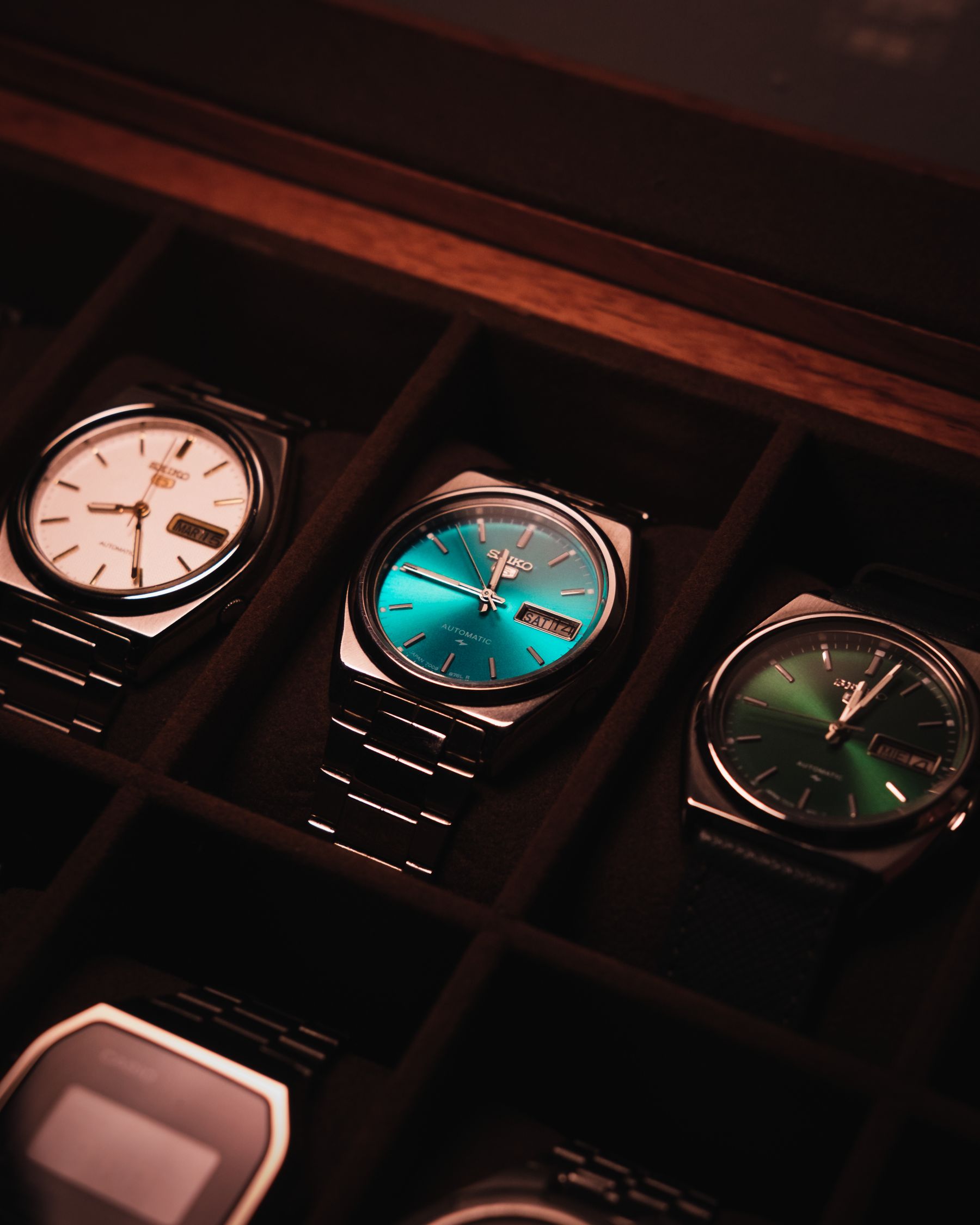
Choose a watch box for stable organization at home and a structured roll for carrying a small, deliberate rotation. Protection comes from secure fit and complete separation, not price, capacity or decorative materials.
Compare the decision
FormatWatch box
Best useOrganizing a regular home rotation
Primary riskPoorly sized cushions or adjacent watches touching
FormatStructured roll
Best useCarrying two or three watches
Primary riskWatches shifting when carried vertically
FormatIndividual pouch
Best useOne-watch storage or discreet travel
Primary riskLimited crush protection
FormatOriginal presentation box
Best usePreserving the complete set
Primary riskOften bulky and not designed for daily access
Start with the job
A watch box is designed for stable storage at home. A watch roll is designed to move a small number of watches while keeping them separated. Both can protect a collection, but neither is automatically safer simply because it looks substantial.
Count the watches you actually need to store or carry. A large box with loose cushions can be less useful than a compact box that holds each watch securely. For travel, extra capacity often creates unnecessary bulk and attention.
Protection depends on fit
The cushion should support the bracelet or strap without forcing it closed too tightly. Each compartment needs enough clearance to prevent cases, crowns and bracelets from touching. Soft lining helps, but proper separation does most of the work.
For a roll, confirm that watches cannot slide toward one another when the case is carried vertically. For a box, look for a stable lid, a flat base and compartments sized for your largest watch.
A practical decision
Choose a box for everyday organization and a roll or structured pouch for deliberate travel. If you own only one or two watches, individual pouches may be the simplest solution. Storage should reduce handling and contact, not encourage you to pack more.
- Home collection: stable watch box
- Frequent travel: structured roll or pouch
- Large bracelets: generous cushion and compartment
- Documentation: store separately in a dry location
Materials and construction worth paying for
A rigid outer shell, dependable closure, clean lining and accurately sized dividers provide more practical value than exotic leather or prominent branding. Inspect hinges, snaps and zipper paths to make sure hardware cannot contact a watch.
Future product recommendations should be evaluated against these protective details first. An affiliate relationship, when approved and disclosed, should never substitute for testing dimensions and construction.
The WatchAnnex conclusion
Most owners benefit from a modest box at home and one compact travel solution. Buy only after checking the internal measurements against the watches you own. When relevant inventory and approved gear partners are available, WatchAnnex can connect this guidance to appropriately sized options rather than a generic product list.
Take this with you
- Measure the largest case, crown and bracelet in the collection
- Confirm every watch has its own fully separated compartment
- Check cushion fit without forcing the clasp closed
- Test whether watches shift when the case is lifted or turned
- Store documents and spare parts separately in a dry location
Photo: Oguz Kagan Cevik / Pexels ↗